Impression Counting Standards in AI Ad Environments
Ad impression standards designed for display pixels don't work inside AI chatbots.

The impression standards that display advertising spent two decades perfecting were built for a rendered object with a pixel boundary. Conversational AI produces neither pixels nor boundaries; it produces text that arrives one token at a time. That mismatch is not a rounding error to smooth over later. That mismatch is the reason the entire measurement stack built for programmatic advertising cannot simply be picked up and dropped into a chat interface, and the same mismatch is the reason buyers and sellers in this channel need a new counting logic before the dollars scale further than they already have.
Where the render-and-pixel logic fails when ads live inside generated text
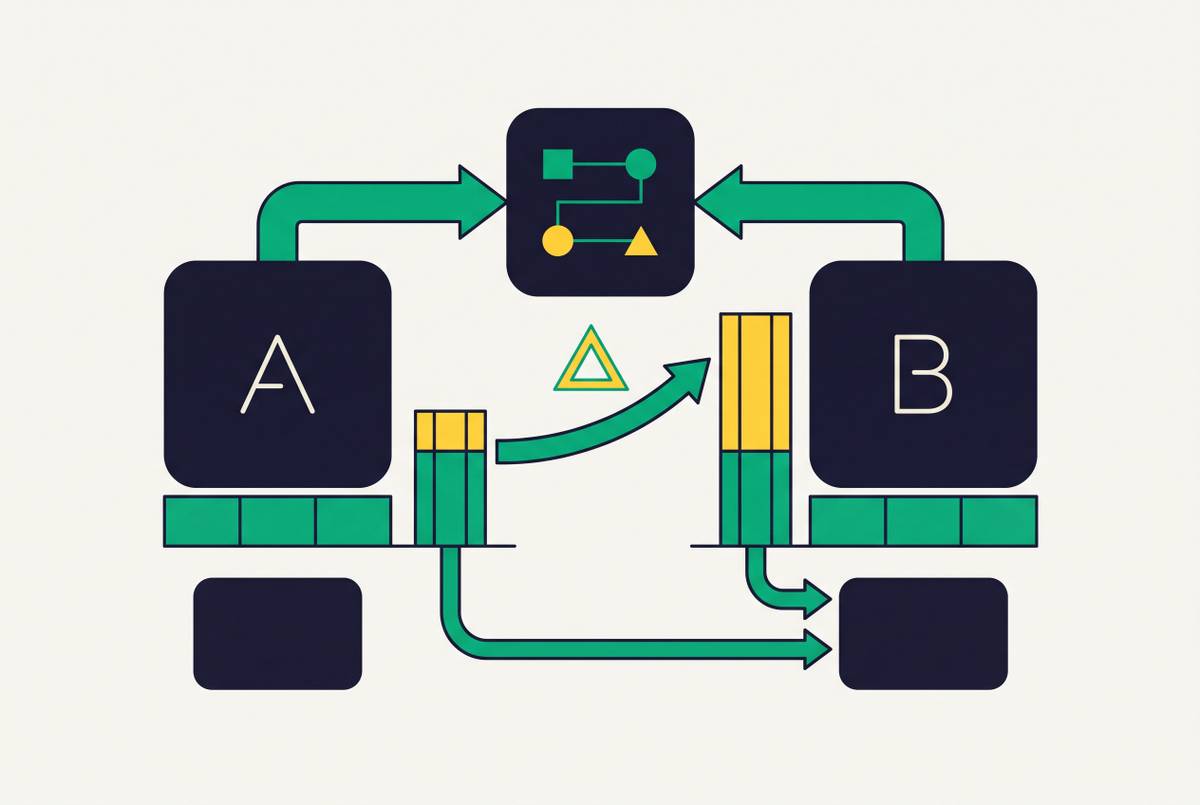
The IAB/MRC framework treats an impression as a discrete, spatially bounded creative object: a bounded ad rendered in a slot, occupying measurable pixel area for a measurable duration. The "count-on-begin-to-render" trigger fires the moment that object starts painting to the screen, and every downstream standard, viewability thresholds included, inherits that assumption of a slot and a render event.
Sponsored content in a large language model response has none of that. Under the framework described by University of Maryland researchers Feizi, Hajiaghayi, Rezaei, and Shin in SIGECOM Exchanges, commercial content gets appended to the model's input with a special tag marking sponsored tokens, and the model then produces one integrated response combining sponsored and non-sponsored content. What comes out the other end is prose. The bidding module generates bids based on those modified outputs, so the impression sits downstream of the bid rather than serving as its precondition, the reverse of how real-time bidding works in display.
Four ad surfaces have been proposed for chat interfaces so far: an inline sponsored card that loads below the assistant's answer, a sidebar placement, a sponsored follow-up suggestion chip, and a brand mention woven directly into the response text. Only the first of those, the inline card, has anything resembling a render event, and even that event is ambiguous given the nature of streaming text delivery. A brand mention embedded in the answer is just text. There's no creative object, no render trigger, and no pixel area to clear a threshold against, so the MRC viewability standard doesn't apply to it at all, by definition rather than by gap.
Verification vendors face a parallel wall. Their tags need a page to execute a script on. Conversational interfaces don't have a page in the sense that display inventory does, and no accepted method exists yet for a third-party tag to instrument a token stream as it's being generated.
The multi-turn problem: when does a single conversation contain one impression or several
Display and search counting both assume one bounded exposure: one creative, one user, one moment. A multi-turn conversation doesn't offer a natural edge to count against.
Perplexity tested a sponsored follow-up suggestion chip before pulling ads entirely in February 2026. The chip appeared during a conversation, and if a user ignored it and kept talking, the industry had no settled answer for whether that ignored chip still counted as an impression. That ambiguity represents a live measurement failure, not a hypothetical one.
The same brand mention can also resurface across several turns of one session. Does each appearance count on its own? Does only the first one count? Does none of them count if the user never acts on any of them? Layered on top of that is a subtler problem: intent accumulates as a conversation goes on, so the signal behind a mention at turn three is richer than the same mention at turn one, yet legacy impression counting has no way to weight an exposure by the context it landed in.
One proposed framework for chat ad measurement suggests classifying user response, acceptance, neutrality, or rejection, through a short LLM call that reuses existing context. That's a workable feedback signal for optimizing an ad system. It is not a standardized impression event, and the gap between those two things is exactly where Perplexity's ad experiment ran into trouble; Brainlabs described measuring success across multi-turn chats as "incredibly tough," and those difficulties compounded the challenges that ended the test. Frequency caps, reach counting, and CPM billing all depend on knowing what the countable unit is. Right now, for a conversation, nobody has agreed on one.
Privacy constraints that remove the verification layer entirely
Legacy impression accountability runs on three parties: the ad server counts, a verification vendor instruments the page independently, and the buyer reconciles the two numbers. That middle party needs user-level data to do its job.
Perplexity's advertising announcement stated that it would never share personal information with advertisers, a policy that rules out the tracking infrastructure verification vendors rely on to confirm impressions and clicks independently of the platform itself. Take away user-level signals and there's nothing left for a verification vendor to instrument. The "measurable impression" tier of the MRC framework just disappears, along with the third-party confirmation that made the ad server's own count trustworthy in the first place.
Wu and Bao's MIT/Accenture analysis makes a related point: AI system outputs are dynamic, personalized, and lack the clear provenance that disclosure and auditing standards were built around, which raises transparency questions those older standards were never designed to answer. Anthropic goes further still, treating a commitment to keep Claude free of advertising as a selling point in itself, evidence that some AI publishers won't accept even a lightly instrumented ad stack, privacy-first positioning or not.
DoubleVerify's MRC-accredited attention methodology, the only one accredited as of late 2025 under the IAB/MRC's November 2025 Attention Measurement Guidelines, depends on inputs that require instrumented, observable user environments. None of those three inputs exist in a no-PII conversational environment. So even a fix for rendering pixels correctly wouldn't solve this one: the verification architecture that makes display numbers trustworthy has no path into a privacy-committed chat interface.
What the attention guidelines do and do not solve
IAB and MRC published formal Attention Measurement Guidelines in November 2025, the first industry-wide standard of its kind, built with input from more than 200 experts spanning brands, agencies, publishers, and measurement firms. The guidelines lay out methodological rules for four approaches: data signals, visual tracking, physiological observation, and survey-based methods, along with transparency, disclosure, validation, and auditing requirements for MRC accreditation.
What they actually fix: comparability across display and video environments where those four methods can be deployed in the first place, plus an accreditation path that moves the industry past pure viewability as a stand-in for attention. Lumen's research, finding that only roughly a third of viewable digital ads actually get looked at, is the reason attention was worth pursuing as a metric at all.
What they don't fix is everything about the conversational surface. Visual tracking needs a rendered creative with pixel area, so it has nothing to attach to for a brand mention or a sponsored token buried in a text stream. Physiological observation needs instrumentation of the user's physical environment, which a chat interface doesn't provide. Data signals need user-level data that privacy-committed platforms have already said they won't hand over. Survey methods could, in theory, adapt, but they measure recall after the exposure, not the exposure itself. The guidelines assume a displayable object somewhere in the chain. Take that object away and the accreditation pathway, however well built, has nothing left to accredit. Accreditation is also still thin: DoubleVerify is the only accredited methodology so far, so attention scores are directional within one vendor's own system and not yet comparable across platforms, a limitation that only gets sharper once applied to an AI ad environment nobody's built a standard for yet.
The monetizable unit that conversational AI produces
Industry analysts have started describing the shift in direct terms: the monetizable unit moves from pages and impressions to intents, tasks, and decision moments inside a conversation. The event that matters isn't click-through rate; it's whether something got recommended, shortlisted, chosen, or bought.
A user's prompt is an active statement of intent, sharper than a keyword bid and closer to an actual purchase decision than any demographic overlay could get. It's an active statement of intent, sharper than a keyword bid and closer to an actual purchase decision than any demographic overlay could get. OpenAI's Conversions objective, available as of mid-2026, is built around exactly that idea: advertisers pick a downstream event, a purchase, a lead form, a sign-up, and the system adjusts the per-click auction bid based on predicted conversion likelihood drawn from the live context of the conversation. ChatGPT Ads reportedly reached a substantial annualized revenue run rate within two months of launch, with CPMs running $25 to $60, and that $60 ceiling represents real market pricing for conversational intent, well above what typical display CPMs command.
The proposal to classify user response as accepted, neutral, or rejected through a short LLM call functions as a proto-measurement unit built for conversation rather than borrowed from display. What that implies for counting logic is a genuine departure from the old model: an ad served into a high-intent commercial prompt isn't equivalent to one served into a low-intent aside, even though both would "render" identically under the old definition. Frequency and reach likely need to be redefined around the session as the unit of account, not the individual creative render. And the signal that actually carries value is downstream engagement with the conversation, not time on screen.
The stakes Perplexity's exit illustrates capture the dynamic better than any metric could: an answer engine nobody trusts has nothing left to sell. Measurement standards for this channel have to build that trust dynamic in, or they'll end up devaluing the very inventory they were supposed to price.
What an accountable impression standard for conversational AI would need to specify
A workable replacement standard has to answer at least four questions that display's framework settled decades ago and conversational AI has left wide open.
First, the counting event itself: what observable, loggable moment counts as an impression, whether that's an ad object fully resolved and rendered as in the inline card format, a sponsored token delivered mid-stream, or something else entirely, and that answer likely needs to be specified per format rather than assumed universal. Second, the session boundary is whether counting happens by session, by turn, by commercial-intent turn, or by user response event. Third, a substitute for third-party verification in a no-PII environment, which could take the shape of publisher-reported delivery logs with independent auditing, cryptographic attestation, or incrementality-based measurement instead. Fourth, a context qualifier that reports and prices impressions served into high-intent prompts separately from those served into low-intent ones, since averaging them into one CPM buries the exact signal that makes this inventory worth buying.
None of this is waiting on standards bodies to catch up. OpenAI's self-serve Ads Manager, launched in May 2026 with no minimum spend and rolling out across markets including the UK, Japan, South Korea, Brazil, and Mexico, is already transacting at real volume with no MRC-equivalent standard underneath it. The IAB's November 2025 Attention Measurement Guidelines offer a procedural template that can be copied: transparency requirements, validation rules, an accreditation pathway, even if the measurement methods themselves have to be rebuilt from scratch for this surface. Publisher-side ad integrations already generate structured objects, title, body, call to action, advertiser URL, disclosure string, alongside server-side delivery logs, which is a data layer a conversational audit standard could actually be built on, assuming the industry agrees on what gets logged and when.
Wu and Bao's MIT/Accenture analysis puts global spend on search and social advertising on track to top $600 billion in 2025. Getting measurement wrong in the channel that's replacing search as the default way people find information is not a marginal risk at that scale. The brands and buying platforms that help define what counts as an impression here will hold a real structural edge over everyone who waits: they'll understand what the resulting numbers actually mean, because they'll have had a hand in deciding what those numbers were allowed to mean in the first place.