Which DSPs Let You Buy Ad Placements Inside ChatGPT and Perplexity
ChatGPT is the only live option, with three ways to buy in.

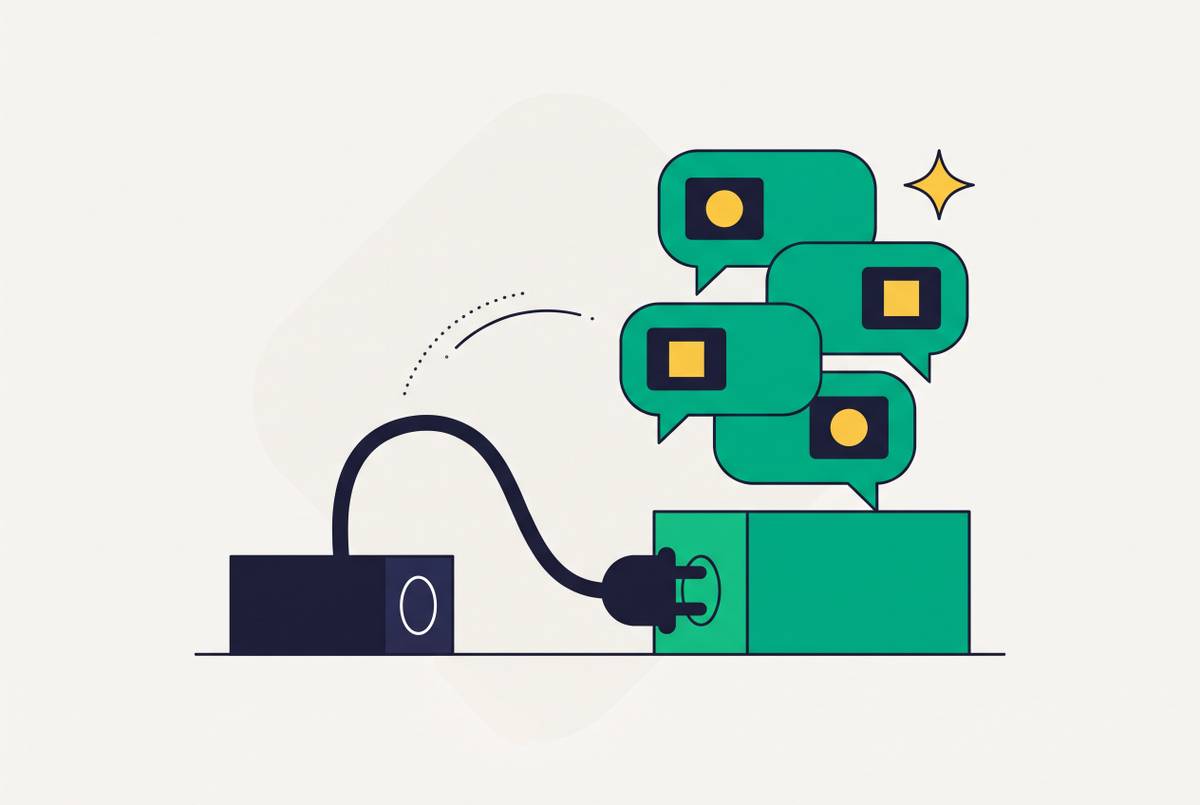
ChatGPT ad inventory is available through OpenAI’s self-serve and direct-sales routes, with DSP options including StackAdapt, Criteo, and Amazon DSP’s US pilot. Perplexity exited advertising in 2026 and is not a paid-placement destination. The buying decision therefore starts with available inventory, then turns to whether a standalone campaign or a cross-channel DSP route fits the advertiser’s needs.
Why the question "which DSPs let you buy inside ChatGPT and Perplexity" needs a reality check before it gets an answer
The question assumes two comparable destinations for programmatic spending. That assumption no longer holds in 2026. Perplexity stopped taking new advertisers in October 2025, phased out placements by the end of that year, and confirmed its departure from advertising in February 2026. An offer of “Perplexity ads” today does not describe available paid inventory inside the assistant.
ChatGPT went the other way, opening up to more advertisers after a February 2026 pilot and reaching 89 countries by October 2026. Its expansion creates a genuine buying decision. Perplexity instead remains an earned-visibility surface, where citations are not purchased placements. DSP selection comes after that distinction, because access to an advertising platform is useful only if the intended surface actually accepts advertising.
What the inventory landscape across major AI assistants actually looks like in 2026
ChatGPT has a dedicated self-serve advertising system, while Google and Microsoft extend existing campaigns into AI placements. Google makes existing Search, Shopping, and Performance Max campaigns eligible for AI Overviews and AI Mode without requiring a separate buy.
Claude and Perplexity are ad-free, while Elon Musk announced ads inside Grok’s answers in August 2025 without an established launch as of October 2026. Meta stated that conversations with Meta AI would inform targeting in other Meta apps from December 2025, but advertising inside the assistant was not established as of mid-2026. Using conversational signals elsewhere is not the same as buying conversational inventory. For buyers already running Google or Microsoft campaigns, AI placement is an extension of an existing relationship, whereas ChatGPT requires a new buying decision.
How ChatGPT ad placement actually works — formats, targeting, and who sees ads
ChatGPT’s standard ad is a single sponsored unit below the response, labeled “Sponsored.” It includes the advertiser’s name, favicon, headline, body copy, image, and landing page. Shopping-style ads use product feeds to show prices and ratings in product cards. Sponsored Agents, which let users converse with a brand’s own agent, remain in limited alpha.
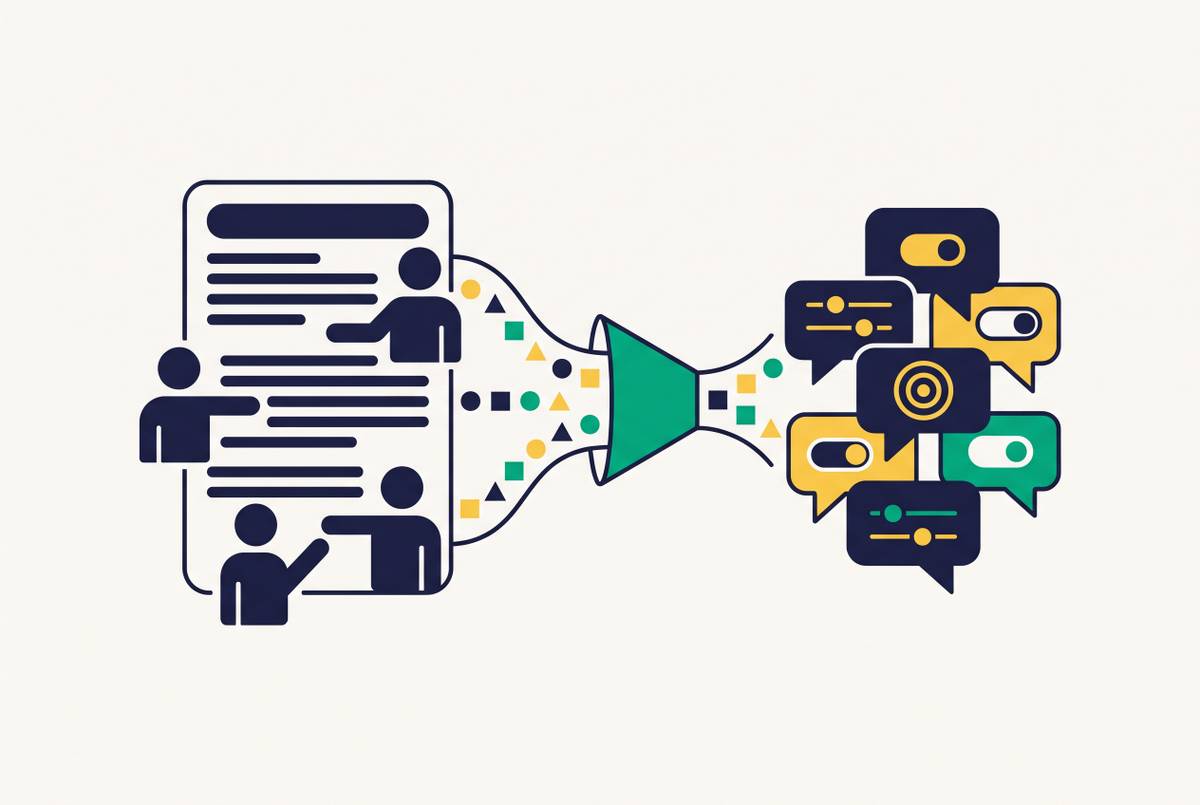
The matching mechanism differs from a keyword auction. Advertisers supply context hints describing conversations, topics, or situations in which an offer is relevant. OpenAI states that these are not exact-match keywords, and the system also considers the landing page, ad copy, and image. When a user enables ad personalization, additional signals from the broader ChatGPT experience may apply.
That matching does not expose the underlying conversation to advertisers. OpenAI states that advertisers do not receive conversations, chat history, memories, names, email addresses, precise location, or IP addresses, and that it never sells user data to advertisers. Personalized ads are not initially available in the EEA or Switzerland. Political ads are prohibited.
The three routes to buying ChatGPT inventory and when each one fits
OpenAI’s Ads Manager is the standalone route. Its beta opened to US advertisers on 5 May 2026, followed by public self-serve access from July and availability in 89 countries by October. The US minimum daily budget is modest, with no minimum spend commitment. This fits a single US brand seeking direct familiarity with the surface, although an approval queue, category restrictions, and changing controls complicate launch planning. An advertiser API also supports programmatic campaign management.
The DSP and partner route serves a broader media plan. OpenAI’s technology partners include Adobe, Criteo, Kargo, Pacvue, and StackAdapt, while Amazon DSP introduced a US pilot extending campaigns into ChatGPT on 10 September 2026. The distinction is between technology partnerships and a specified DSP pilot, rather than an unsupported ranking of purpose-built conversational platforms against established DSPs.
DSP access helps agencies that manage multiple clients or need to plan and report on ChatGPT alongside display, video, CTV, and audio. It may also work for advertisers in places where self-serve is unavailable, if a partner offers access there. Entry costs have changed quickly. Criteo cut its minimum by a large amount in early June 2026, and StackAdapt dropped its minimum in May, after a managed-service pilot that required large spending commitments to join.
OpenAI also has agency relationships with dentsu, Havas, Omnicom, Publicis, and WPP. HubSpot is its first CRM partner, and Shopify became its first e-commerce partner on 16 September 2026. Those relationships should not be mistaken for interchangeable DSP products. Direct sales is the third way to buy, for large managed campaigns that need concierge support or formats beyond self-serve, such as Sponsored Agents alpha.
PubMatic reported 30 live end-to-end agentic campaigns on AgenticOS by April 2026. Magnite built a seller agent into SpringServe, while Yahoo DSP opened to outside agents through MCP and APIs. These developments show buying systems becoming accessible to agents, but they do not by themselves establish access to ChatGPT placements.
What the early performance data says — and where it is thin or contested
ChatGPT passed a $1 billion annualized advertising revenue run rate by 31 August 2026, establishing commercial scale. Early conversion-rate signals are encouraging, while click-through rates are modest and the evidence does not yet establish a dependable performance benchmark. Vendor-reported conversion findings, including those from Criteo, remain vendor evidence awaiting independent validation.
Maximilian Kaiser and Christian Schulze’s working paper under review used e-commerce website data and found that paid ChatGPT visits generated meaningfully less revenue per session for US advertisers than paid Google Search visits. TrafficGuard found invalid click rates varying widely by advertiser during August and September 2026. The traffic-quality variation supports monitoring as a standard part of a flight, while the revenue comparison challenges the assumption that conversational intent automatically produces search-like returns.
The appropriate early-flight framing is therefore a learning investment. A 2026 test can legitimately purchase familiarity with formats, matching, and operational constraints when priced as R&D, without yet proving repeatable performance. Most AI advertising spending still runs next to AI answers through search adjacency, rather than inside assistant conversations, so in-chat results belong to a comparatively young market.
How intent signals inside AI conversations differ from keyword and demographic targeting
A keyword identifies a topic, while a conversational prompt can frame a problem. The user may describe a need, constraints, and emotional context in the same exchange. That gives the platform a different matching signal. Rather than relying only on a short query or a demographic category, it can consider what the person is trying to resolve at that moment.
A single thread can also contain several decision stages. Informational research fits educational content, comparative evaluation fits competitive positioning, and transactional intent fits direct-response creative or product cards. The progression from concern to consideration to decision can happen without leaving the conversation. Platforms relying on keywords or cookies do not capture that progression in the same way.
The platform can match against conversational context without giving the buyer access to the conversation or the user’s identity. Contextual placement is distinct from following a person around the web, even though enabled personalization may introduce broader ChatGPT signals. The targeting task is to describe relevant situations precisely.
Which verticals are buying ChatGPT ads and what the early evidence shows by category
Shopping was the first category to lead, and financial services, software, and travel took a growing share as the platform developed. Shopping has a concrete format fit. Product-feed ads can show prices and ratings when people use a conversation to weigh up products or show purchase intent. Software’s growing share shows that advertisers in the category are buying ads, but the evidence does not yet show how well those ads work or which creative works for them.
Finance and health require a more qualified reading. OpenAI’s April 2026 policy update removed the categorical default block on ads in medical, legal, and financial advice contexts. Its July update formalized manual, case-by-case advertiser approvals for financial and health categories, while legal-services advertisers remained prohibited until August. Placement eligibility did not amount to unrestricted advertiser approval. VML’s global client lead Amy Winger described finance clients as “curious with a big dose of caution,” while healthcare brands were actively seeking entry.
Trip-planning conversations combine destinations, timing, budgets, and preferences across multiple turns, creating opportunities to match an offer to a developed requirement. Travel now accounts for more of the spending on ChatGPT ads. But formats and measurement for travel ads are still new, so an ad that fits the planning process has yet to prove it can bring predictable campaign returns.
Brand safety inside AI responses — why conversational context creates risks that page-level classification cannot catch
Conversational relevance also creates a distinct adjacency risk. A query such as “best protein powder” may look straightforward in isolation, while the preceding five turns concern eating disorder recovery, body image anxiety, and calorie restriction. The final query has not changed. The context in which a brand would appear has changed substantially, making page-level or domain-level classification inadequate on its own.
The adjacent response is also generated in real time. A model can produce inaccurate content, and that response cannot be pre-screened in the way a publisher domain can. OpenAI’s restriction on ads in sensitive contexts, including “mental and personal health conversations,” still limits where health advertisers can place ads, even as more of those advertisers are allowed in.
Perplexity’s exit illustrates a separate, category-level trust problem. It launched sponsored follow-up questions in November 2024, but advertising represented a negligible share of revenue during the test period. Its CEO described advertising as a signal that undermines confidence in the entire response. Where there is no clearly separate organic zone, uncertainty about sponsorship can affect trust in both the answer itself and the adjacent brand.
For buyers, the practical implication is third-party brand safety measurement. Dynamic conversational adjacency requires monitoring at scale. With this monitoring, hallucination risk remains, as does the tension between ads and trust in the answer. It provides a necessary risk layer for a surface whose content changes with each conversation.
What measurement and attribution look like in a channel where the standard toolkit does not map cleanly
OpenAI supplies impressions, clicks, and basic conversion signals, but not conversations, chat history, user identity, or precise location. The reporting system is younger than established search platforms. Buyers consequently have less information to optimize against, and the missing conversational detail limits how directly they can connect a placement to the decision process that made it relevant.
Last-click attribution can also miss part of an ad’s effect. Someone may research in ChatGPT and later convert through branded search or a direct visit, so platform attribution may leave out the assistant’s role. A zero in the direct-conversion report can therefore coexist with assisted influence. Conversely, that possibility is not proof that the campaign generated incremental demand.
View-through conversions with a multi-week window, branded search lift while ads are shown, and CRM evidence that target accounts are engaging can add to what platform reporting shows. These approaches provide different views of influence. Together, they help buyers assess high-intent moments in a conversation and account for differences in the value of each impression.
A well-designed 2026 test should have a hypothesis, a modest budget, a defined read-out period, and a baseline of organic AI visibility. That baseline helps distinguish paid effects from changes in earned citations. CRM and branded-search signals should be layered into the assessment before ROI is judged, with traffic quality and contextual safety monitored during the flight.